BkMUC-IO
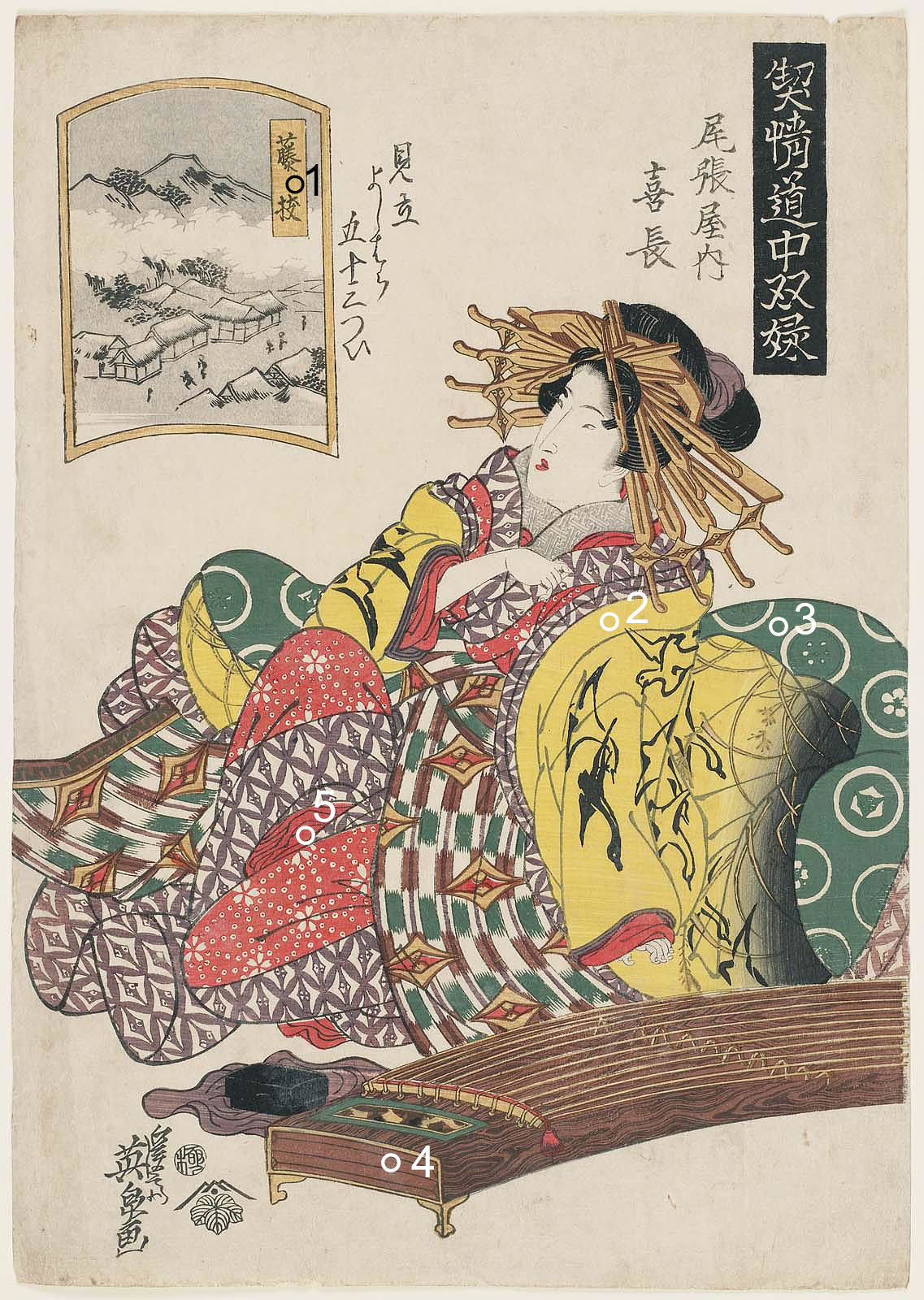
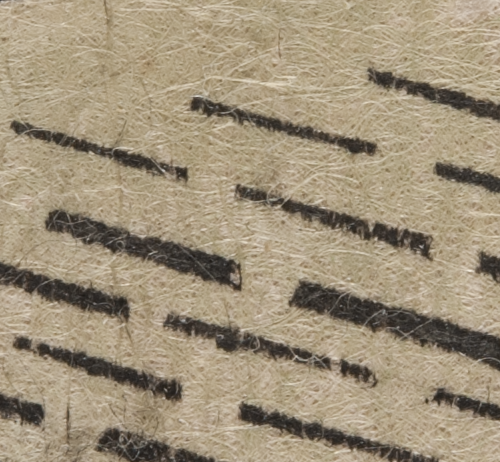
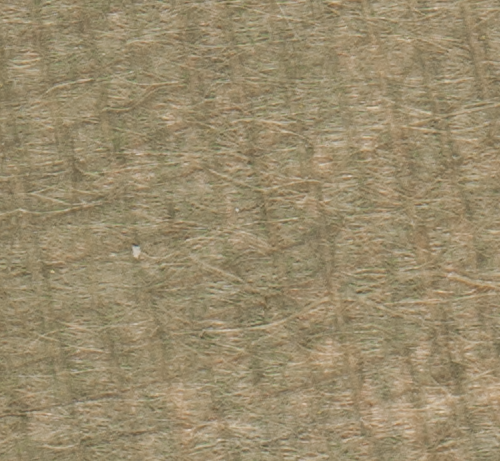
Indigo + Orpiment: Green is achieved by mixing or overprinting a blue and a yellow colorant. The dominant formulation for green after the development of full-color printing in the mid-1700s was a mixture of indigo and orpiment. By altering the proportions of each, a wide variation of greens could be obtained. The preference for this formulation of green may have been due to the relative stability of both indigo and orpiment to moisture. However, like most of the colorants used for woodblock printing during the Edo period, both will fade upon prolonged exposure to light.
For additional information see: Indigo, Orpiment
Examples of Indigo + Orpiment in Ukiyo-e Prints
|


|


|



|


|


Analysis
Fiber optic reflectance spectroscopy (FORS) is used to identify indigo and X-ray fluorescence analysis (XRF) is used to detect arsenic (As) and sulfur (S), which is an indication of the presence of orpiment (As2S3). For more information, please see the individual colorant pages, indigo and orpiment.
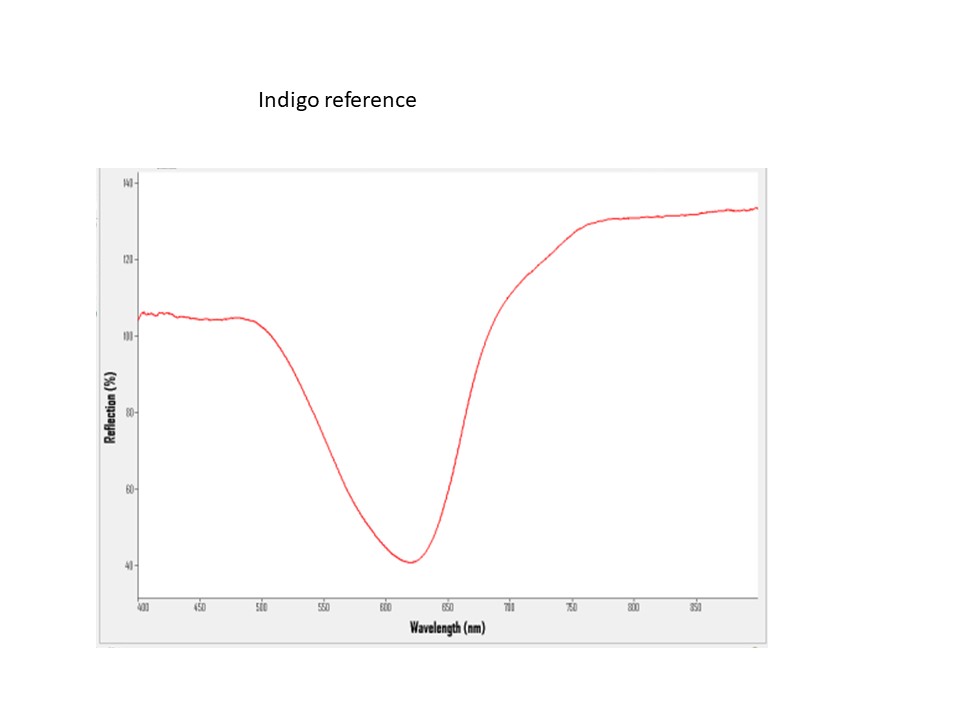
FORS spectrum of Indigo reference 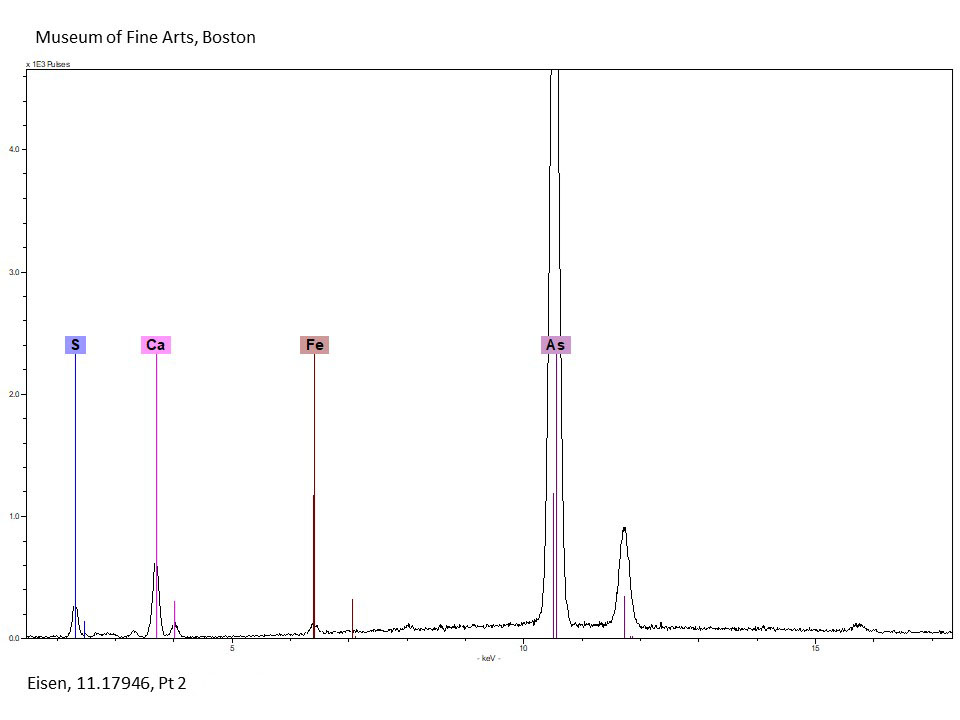
XRF spectrum of Orpiment


List of Prints
Below is a list of prints where indigo + orpiment was detected.