BkMUC-Mad
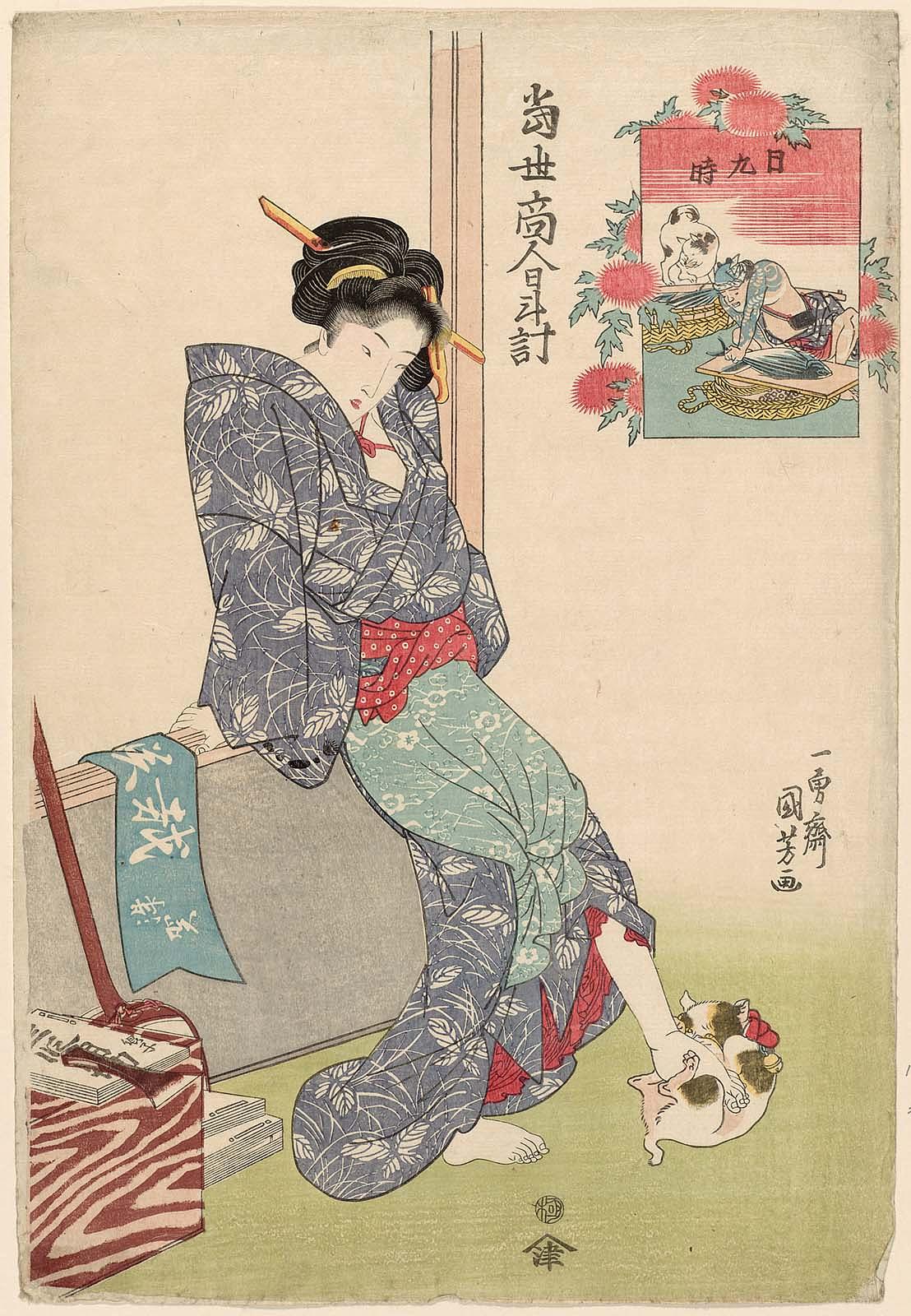
Madder 茜 (akane): A red dye extracted from the roots of any of several species of the genus Rubia. The most commonly used plants include: Rubia tinctorum L., native to the Middle East and eastern Mediterranean, most commonly known as European madder; Rubia cordifolia L., native to large areas of Africa and Asia, most commonly known as Indian madder; and Rubia argyi, native to East Asia. It is currently unknown which species was used for ukiyo-e prints.
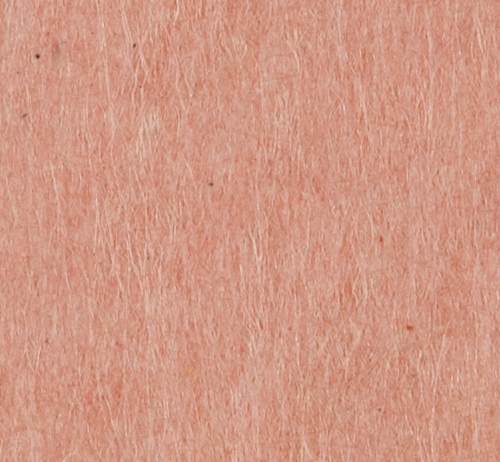
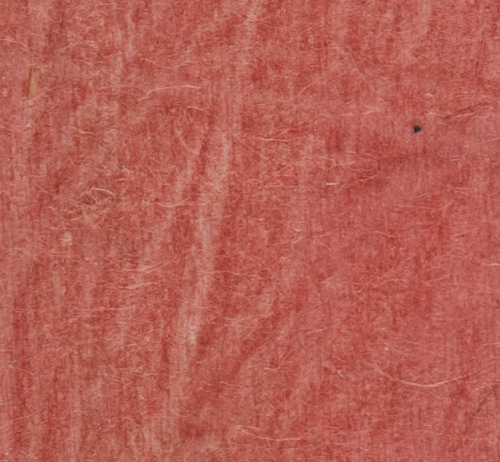
Similar to safflower, madder can range from pink to a deep red. Madder and safflower are the most commonly found red before the introduction of aniline dyes in the 1860s. Safflower and madder are found as a single colorant or as a mixture of the two. Although the visual difference between red safflower or madder used alone and a mixture of the two is currently difficult to discern, madder may have been used to extend the safflower, which was known to be expensive. When possible on a print, the madder region of the back was also analyzed by EEM to determine if safflower was also present because safflower readily penetrates the paper while madder remains on the upper surface. The pink color of madder also appears opaque when compared to the ethereal pink of safflower. The opacity of pink madder may indicate that the colorant may have been laked onto a mineral white, such as calcium carbonate during its formulation. By the mid-1800s, vermilion was also mixed with madder on some prints.
Although not traditionally listed as a printing colorant thought to have been used for ukiyo-e prints, madder has been detected extensively in our analysis. Research of red colorants is ongoing.
For additional information see: Madder, Madder (Rubia tinctorum) LC, Madder (Indian madder, Rubia cordifolia) LC, Madder (Rubia akane) LC, Uemura Dye Archive: Japanese madder 293, 230, Rubia tinctorum (Kew), Rubia cordifolia (Kew), Rubia argyi (Kew)
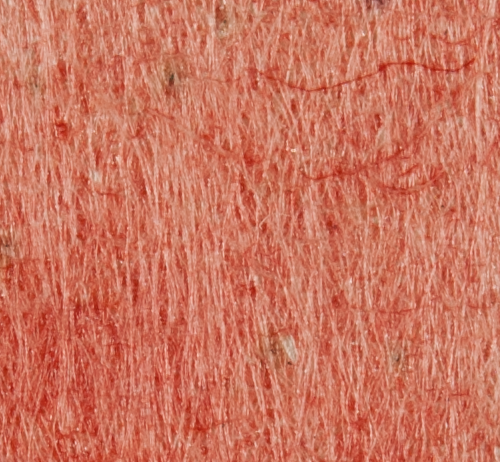
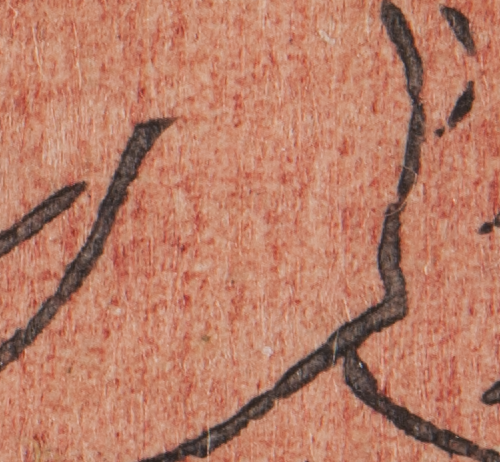
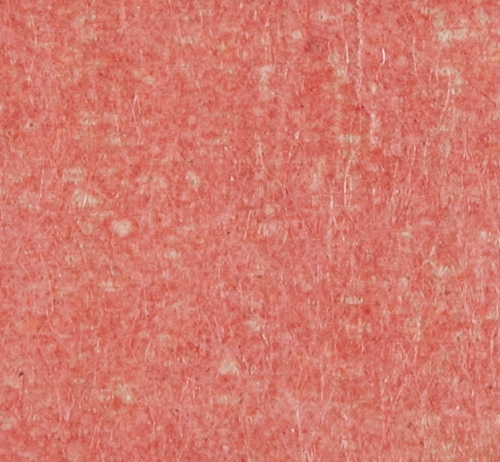
Examples of Madder in Ukiyo-e Prints
|

|

|
|
|


|

|

Add Beauties of the Yoshiwara, madder
Analysis
Excitation Emission Matrix (EEM) spectroscopy can easily identify the organic reds: safflower, madder, and sappanwood.

3D EEM plots for Red references 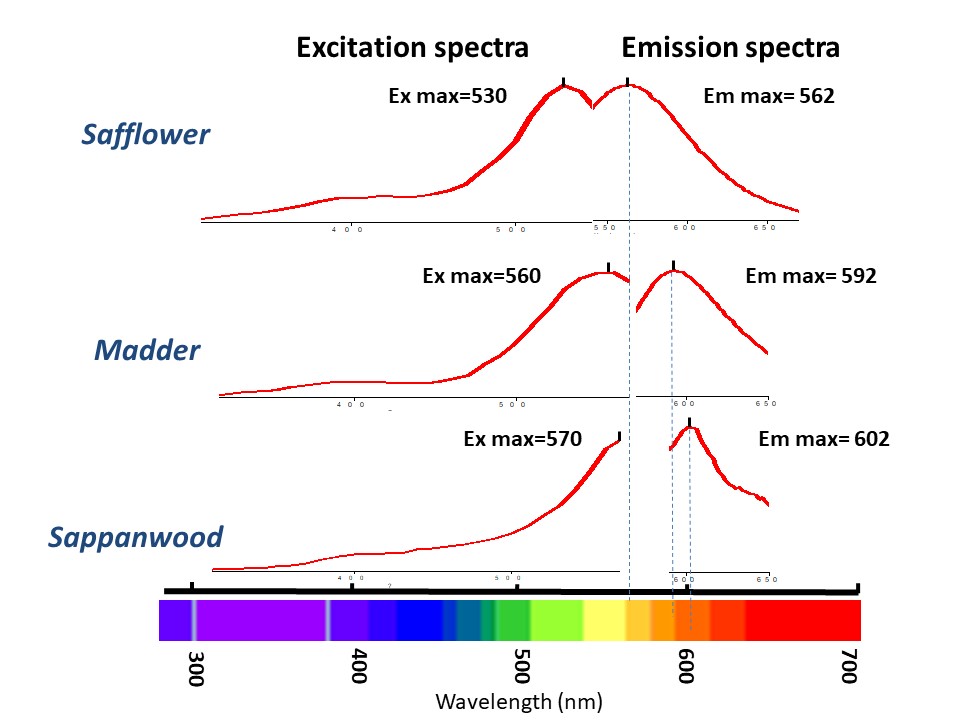
Overlay of EEM curves for Red references 
Overlay of FORS spectra for Red references 
Overlay of Emission curves for Madder 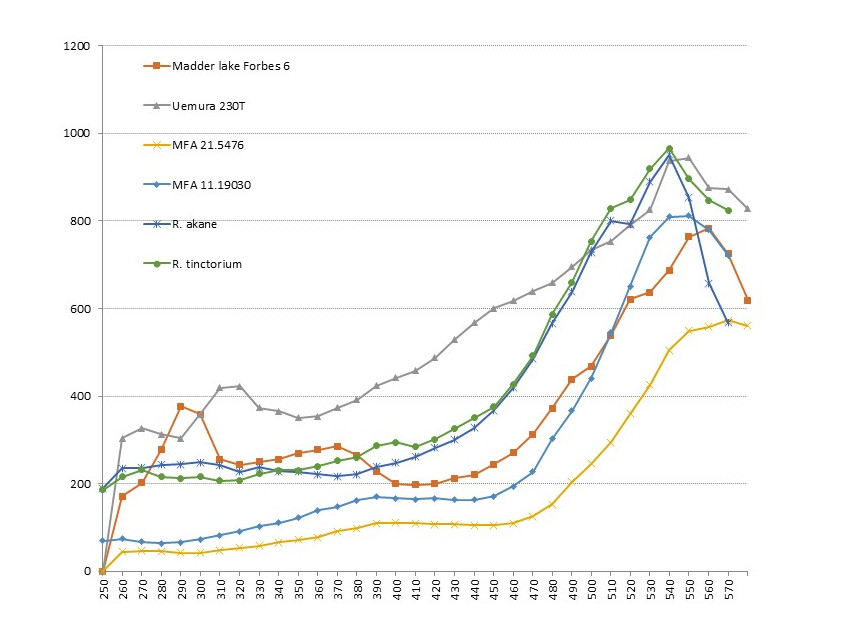
Overlay of Excitation curves for Madder 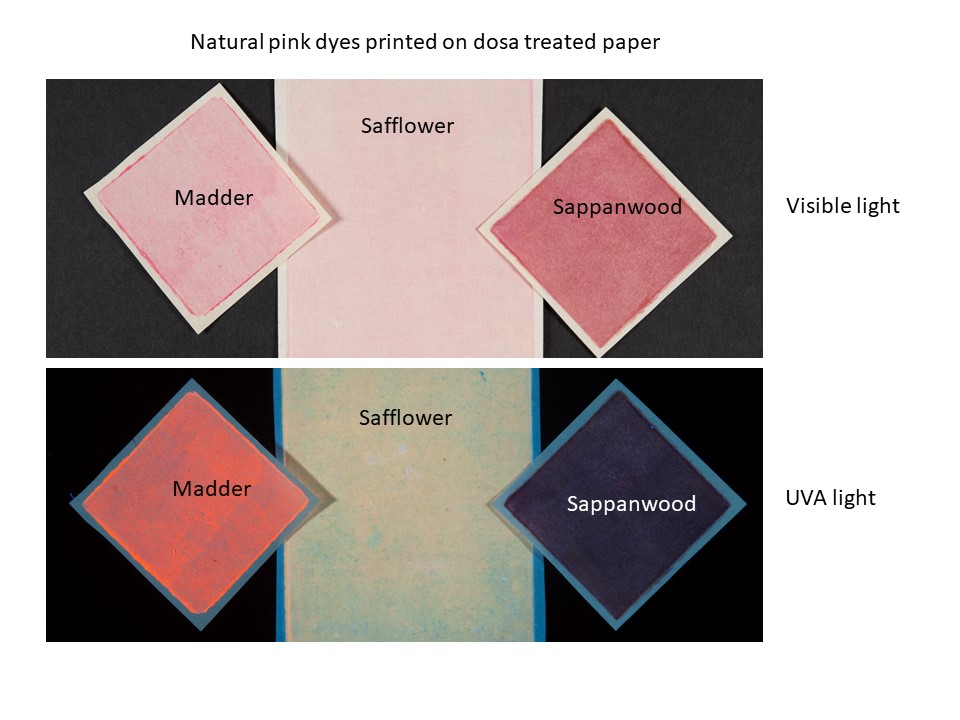
Visible light and UVA for Red references


Interpretation
- Madder fluoresces brightly under UVA radiation and produces a unique EEM pattern that helps differentiate it from safflower, which also fluoresces.
- The 3D EEM spectrum of madder appears as a tall oval (or flatten circle) shape in the orange-red region with an excitation max of 560 nm and an emission max about 580-590 nm.
- Additionally, the 3D EEM spectrum for madder exhibits a vertical 'tail' from along its emission line.
Images of Madder

Rubia tinctorum L.
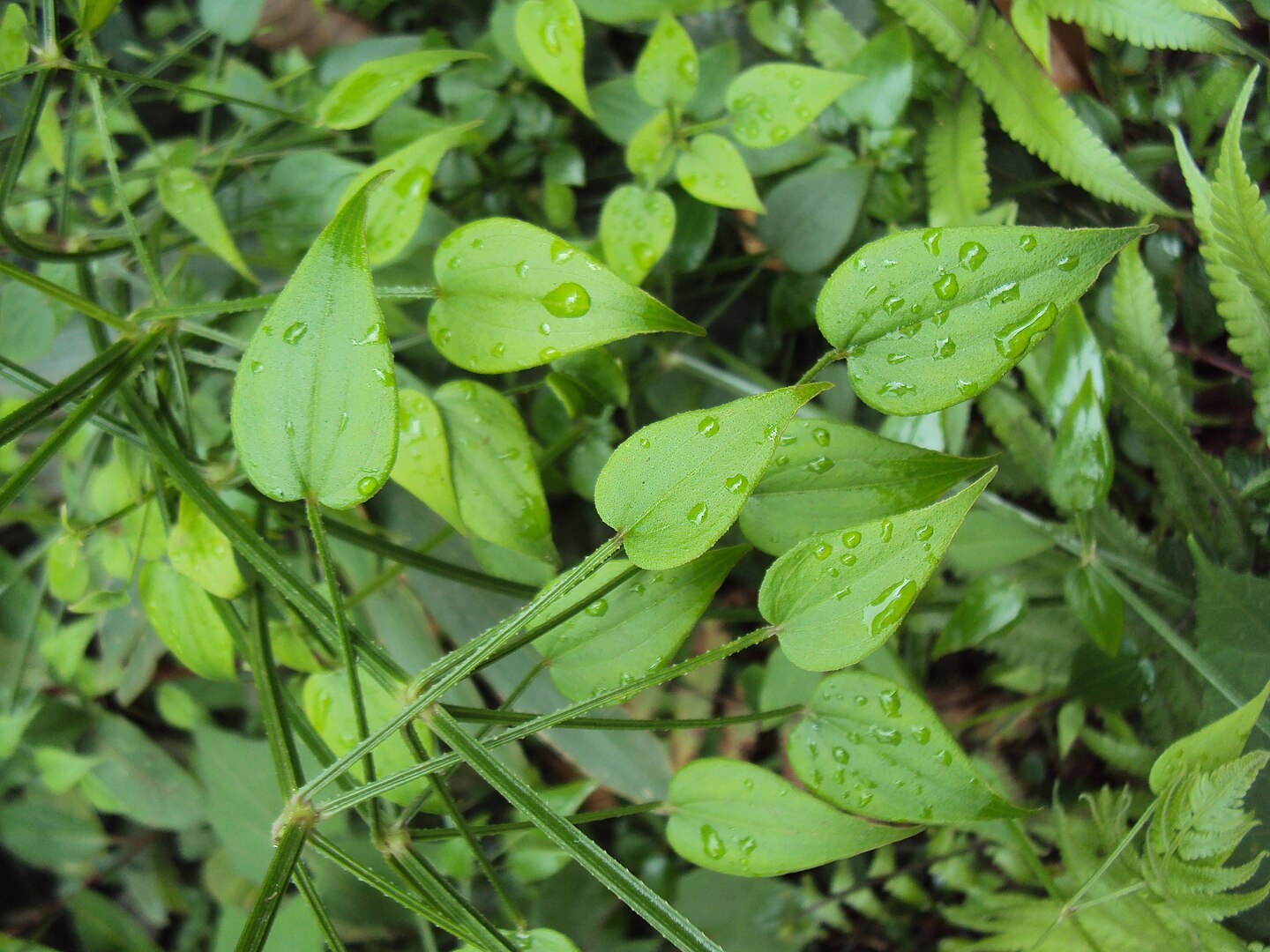
Rubia cordifolia, by Vinayaraj

Rubia argyi

Madder root

Madder, akane
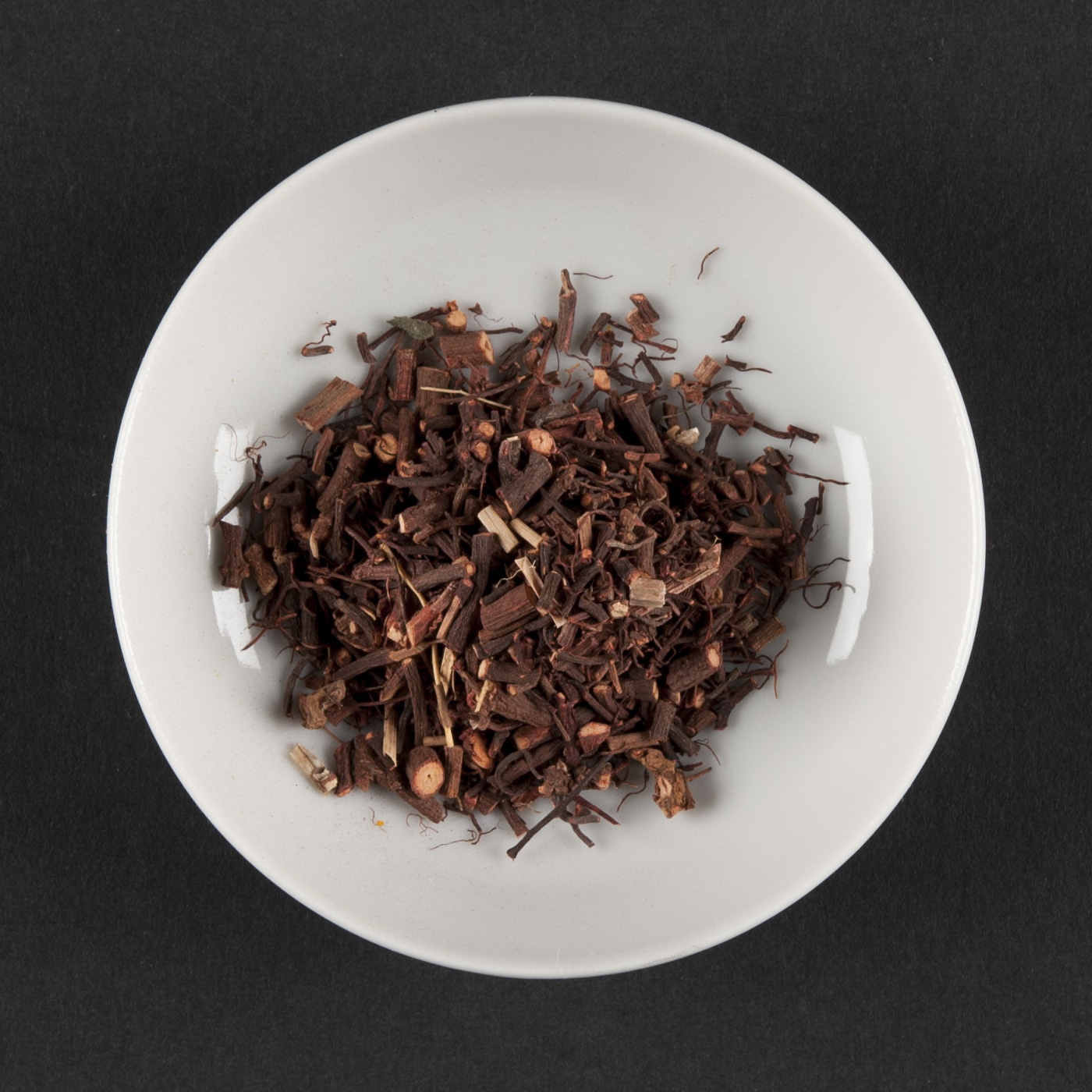
Madder (Rubia argyi), akane

Madder powder (Rubia tinctorum)
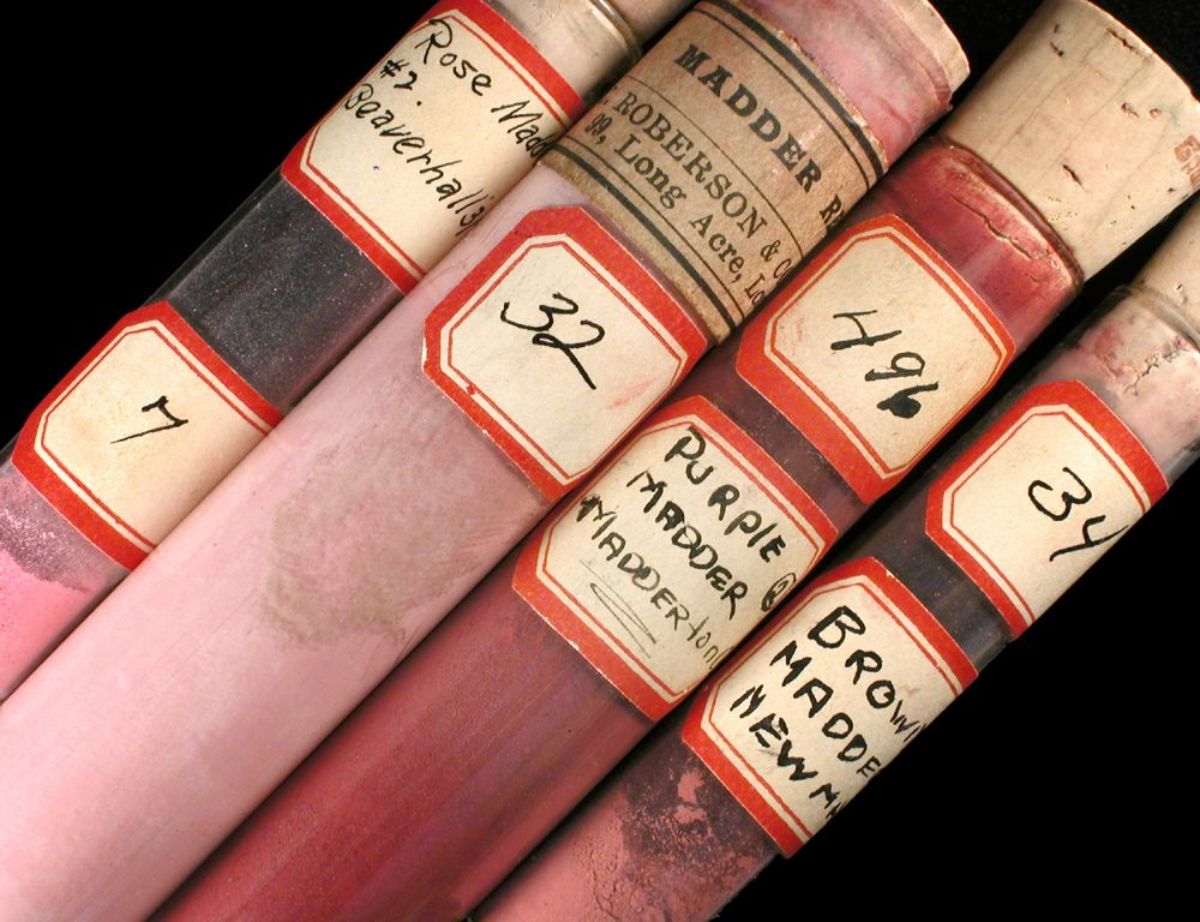
Madder lakes
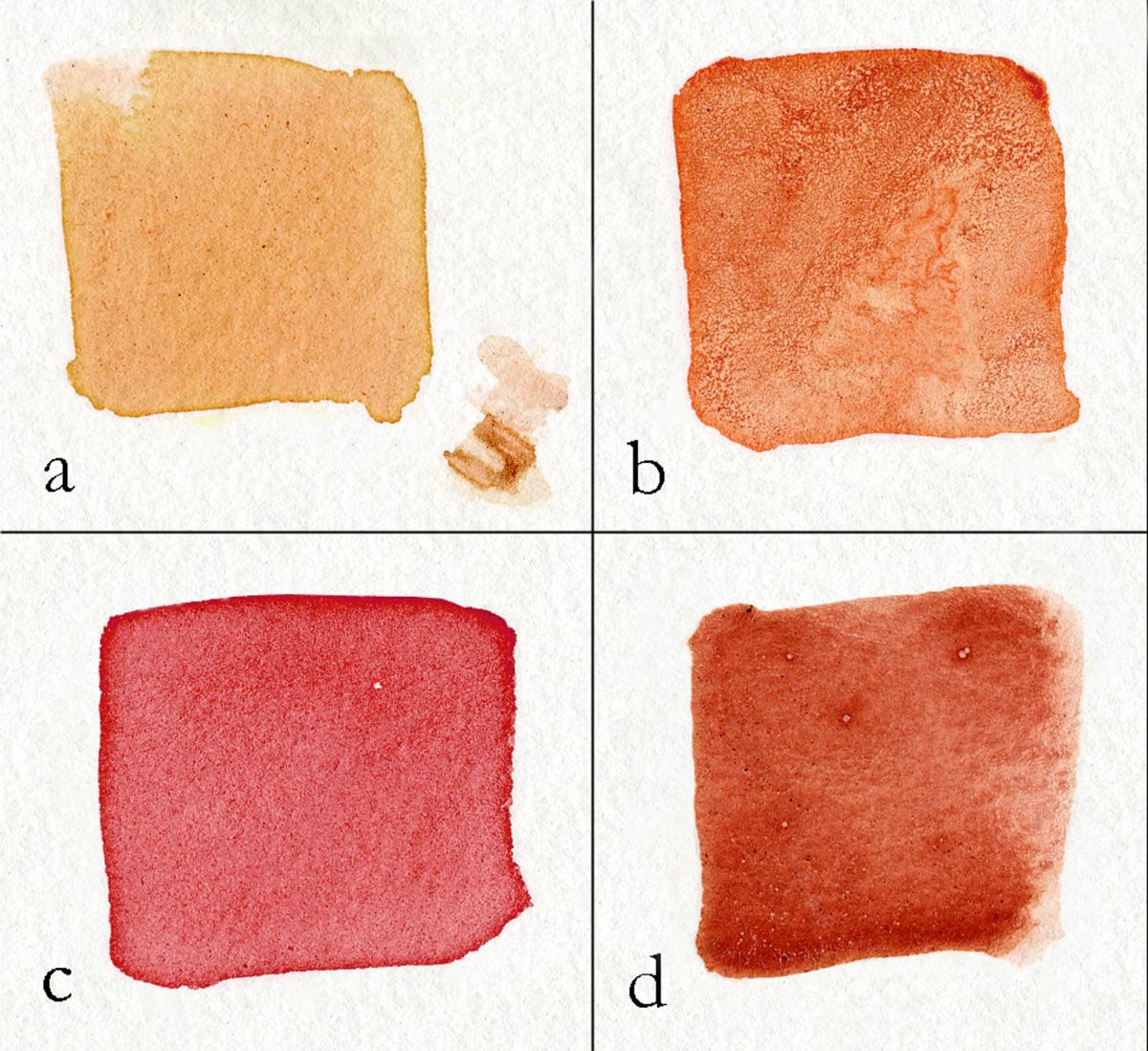
Dye mixtures from madder on paper
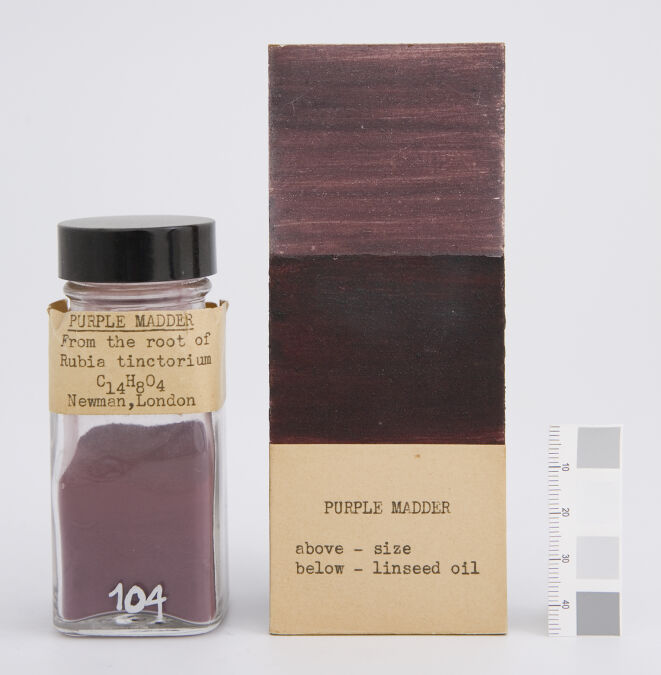
Madder (audio), by Harvard Art Museums


List of Prints
Below is a list of prints where madder was detected.