Madder: Ukiyo-e colorant
Madder 茜 (akane): A red dye extracted from the roots of any of several species of the genus Rubia. The most commonly used plants include: Rubia tinctorum L., native to the Middle East and eastern Mediterranean, most commonly known as European madder; Rubia cordifolia L., native to large areas of Africa and Asia, most commonly known as Indian madder; and Rubia argyi, native to East Asia. It is currently unknown which species was used for ukiyo-e prints.
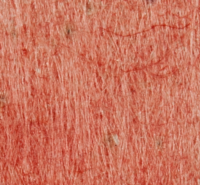
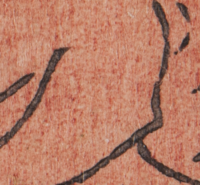
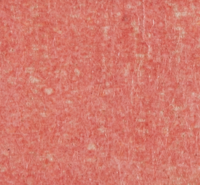
Similar to safflower, madder can range from pink to a deep red. Madder and safflower are the most commonly found red before the introduction of aniline dyes in the 1860s. Safflower and madder are found as a single colorant or as a mixture of the two. Although the visual difference between red safflower or madder used alone and a mixture of the two is currently difficult to discern, madder may have been used to extend the safflower, which was known to be expensive. When possible on a print, the madder region of the back was also analyzed by EEM to determine if safflower was also present because safflower readily penetrates the paper while madder remains on the upper surface. The pink color of madder also appears opaque when compared to the ethereal pink of safflower. The opacity of pink madder may indicate that the colorant may have been laked onto a mineral white, such as calcium carbonate during its formulation. By the mid-1800s, vermilion was also mixed with madder on some prints.
Although not traditionally listed as a printing colorant thought to have been used for ukiyo-e prints, madder has been detected extensively in our analysis. Research of red colorants is ongoing.
For additional information see: Madder, Madder (Rubia tinctorum) LC, Madder (Indian madder, Rubia cordifolia) LC, Madder (Rubia akane) LC, Uemura Dye Archive: Japanese madder 293, 230, Rubia tinctorum (Kew), Rubia cordifolia (Kew), Rubia argyi (Kew)
Examples of Madder in Ukiyo-e Prints
|

|

|
|
|



|

|

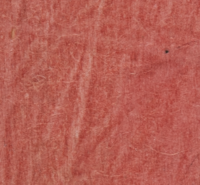
Add Beauties of the Yoshiwara, madder
Analysis
Excitation Emission Matrix (EEM) spectroscopy can easily identify the organic reds: safflower, madder, and sappanwood. Madder fluoresces brightly under UVA radiation and produces a unique EEM pattern that helps differentiate it from safflower, which also fluoresces.
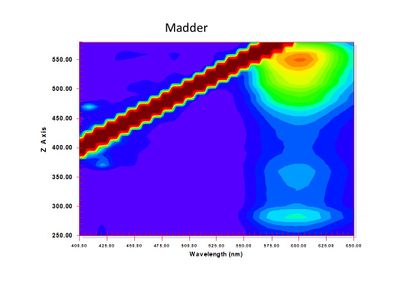
EEM plot for Madder 
3D EEM plots for Red references 
Overlay of EEM curves for Red references 
Overlay of FORS spectra for Red references 
Overlay of Emission curves for Madder 
Overlay of Excitation curves for Madder 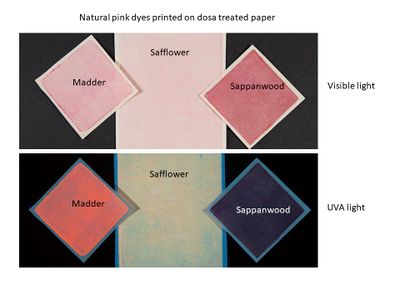
Visible light and UVA for Red references


Images of Madder
Rubia tinctorum L.
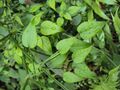
Rubia cordifolia, by Vinayaraj
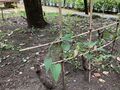
Rubia argyi
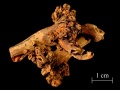
Madder root
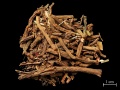
Madder, akane
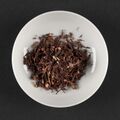
Madder (Rubia argyi), akane
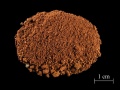
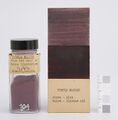
Madder powder (Rubia tinctorum)
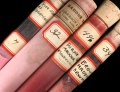
Madder lakes
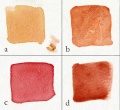
Dye mixtures from madder on paper
Madder (audio), by Harvard Art Museums


List of Prints
Below is a list of prints where madder was detected.
Pages in category "Madder: Ukiyo-e colorant"
The following 78 pages are in this category, out of 78 total.
E
- Eisen, Early Winter: The Day of the Boar in the Tenth Month, from the series Customs of the Four Seasons and Children at Play, 11.25587
- Eisen, Fujieda: Kichô of the Owariya, from the series A Tôkaidô Board Game of Courtesans: Fifty-three Pairings in the Yoshiwara, 11.17946
- Eisen, Kawasaki, No. 3 from an untitled series of the Fifty-three Stations of the Tôkaidô Road, 11.25617
- Eishi, Shizuka of the Shizutamaya, from the series Beauties of the Yoshiwara as Six Floral Immortals, 21.4917
- Eishi, Shizuka of the Shizutamaya, from the series Beauties of the Yoshiwara as Six Floral Immortals, 53.21
- Eishi, Utamaki of the Takeya, kamuro Futaba and Midori, from the series New Year Fashions as Fresh as Young Leaves, 21.4912
- Eizan, Kashiku of the Tsuruya, from the series Array of Beauties of the Pleasure Quarters, 11.17716
H
- Harunobu, Courtesan and Kamuro Looking at the Face of a Komusô Reflected in a Mirror, 45.833
- Harunobu, Kojima Bingo no Saburô Takanori, 11.19633
- Harunobu, Parody of the Three Evening Poems: Teika, Jakuren, and Saigyô, 11.19703
- Harunobu, Young Man Playing a Shakuhachi, 21.4677
- Hiroshige I, Enjoying the Cool of Evening on the Riverbed at Shijô, from the series Famous Views of Kyoto, 06.890
- Hiroshige I, Naitô Shinjuku, Yotsuya, from the series One Hundred Famous Views of Edo, 11.35823
- Hiroshige I, Pine of Success and Oumayagashi, Asakusa River, from the series One Hundred Famous Views of Edo, 11.17029
- Hiroshige I, The Yodo River, from the series Famous Views of Kyoto, 11.2111
- Hiroshige I/Hiroshige II, Ueno Yamashita, from the series One Hundred Famous Views of Edo, 11.35842
- Hokusai, Act I, from the series The Storehouse of Loyal Retainers, a Primer, 11.17539
- Hokusai, Ariwara Narihira, from an untitled series of the Six Poetic Immortals formed by the characters for their names, 11.17502
- Hokusai, Bun'ya no Yasuhide, from an untitled series of the Six Poetic Immortals formed by the characters for their names, 11.17501
- Hokusai, Chiryû, from an untitled series of the Fifty-three Stations of the Tôkaidô Road, 34.303
- Hokusai, Dance of the Gods at the Heavenly Cave part 1, 11.20434
- Hokusai, Dance of the Gods at the Heavenly Cave part 2, 11.20433
- Hokusai, Exhibition of Flower Arrangements in a Room Overlooking the Sumida River, 11.19658
- Hokusai, Fan Kuai and the Banquet at Hongmen, from the series Newly published Perspective Pictures, 11.14710
- Hokusai, Finest Confectionary: Descending Geese at the Sumida River, from the series Eight Views of Edo on paper snack bags, 21.10234
- Hokusai, Procession of a Daimyô Passing Shinagawa on the Way to Kyoto, from the series Newly Published Perspective Pictures, 21.10203
- Hokusai, Sôjô Henjô, from an untitled series of Six Poetic Immortals formed by the characters for their names, 11.17497
- Hokusai, The Kaminarimon Gate at Sensô-ji Temple in Asakusa, 11.19640
- Hokusai, The Story of Minamoto Yoshitsune and Jôruri-hime, from the series Perspective Pictures, 11.17572
- Hokusai, Urashima Tarô Visits the Dragon Palace, from the series Newly Published Perspective Pictures, 11.17547
- Hokusai, Watching Fireworks in the Cool of the Evening at Ryôgoku Bridge, from the series Newly Published Perspective Pictures, 21.10202
- Hokusai, Woman, Child, and Man with Kite, from the series A Collection of Dances, 11.16764
- Hokusai, Ôtomo no Kuronushi, from an untitled series of Six Poetic Immortals formed by the characters for their names, 11.17496
- Hokusai, Ôtomo no Kuronushi, from an untitled series of Six Poetic Immortals formed by the characters for their names, 21.10218
K
- Kiyohiro, The Attributes of the Seven Gods of Good Fortune, 11.19089
- Kiyomasu II, Actor Ogino Izaburô I as Yamagami Gennai, Acting in the Aragoto Style with the Sumikazura Wig, 11.13297
- Kiyomitsu I, Actor Ichikawa Danzô III as Adachi Hachirô, 11.19030
- Kiyomitsu I, Actors Ôtani Hiroji III as Okabe no Rokuyata and Nakamura Sukegorô II as Inomata no Koheiroku, 46.1409
- Kiyonaga, Actors Matsumoto Kôshirô IV as Ukita Sakingo and Sawamura Sôjûrô III as the Ghost of Takao, with chanters Tomimoto Itsukidayû and Tomimoto Awatayû, and accompanist Sasaki Ichishirô, 11.13921
- Kiyonaga, Actors Matsumoto Kôshirô IV as Ukita Sakingo and Sawamura Sôjûrô III as the Ghost of Takao, with chanters Tomimoto Itsukidayû and Tomimoto Awatayû, and accompanist Sasaki Ichishirô, 21.5476
- Kiyonaga, The Brine Maidens, from the series Current Manners in Eastern Brocade, 11.13880
- Kiyonaga, The Brine Maidens, from the series Current Manners in Eastern Brocade, 21.5610
- Kokan, Couple Cooling Off on a Garden Bench, 11.19524
- Koryusai, Descending Geese at Mimeguri, from the series Fashionable Eight Views of Edo, 11.14627
- Koryusai, Twilight Snow of the Bride, from the series Eight Views of Fashionable Human Relations, 11.19541
- Kunisada, Actor Nakamura Utaemon III as the Monkey Trainer Yojirô, from the series Great Hit Plays, 11.15095
- Kunisada, Actor Sawamura Tanosuke II, from the series Actor Rebuses, 11.42324
- Kunisada, Komurasaki of the Kado-Tamaya, kamuro Kochô and Sayuri, from the series Comparison of Beauties of the Pleasure Quarters, 11.20991
- Kunisada, Moon Viewing at Mukôjima, a Triptych, from the series Moon, Snow and Flowers, 11.15216
- Kunisada, Poem by Ariwara no Narihira Ason: (Actor Ichikawa Danjûrô VIII as) Seigen, from the series Comparisons for Thirty-six Selected Poems, 11.42663
- Kunisada, Young Woman Pointing and Giggling, from the series Types of the Floating World Seen through a Physiognomist's Glass, 34.471
- Kuniyoshi, (Actor Ichikawa Ebizô V as) Inuyama Dôsetsu, from the series The Lives of Eight Brave and Loyal Dog Heroes, 11.28841
- Kuniyoshi, Actor Ichikawa Kodanji IV as the Ghost of Asakura Tôgo, 11.30460
- Kuniyoshi, Drying Board Suggesting Hiyodorigoe, from the series Women in Benkei-checked Fabrics, 11.36363
- Kuniyoshi, Hosokute: Horikoshi Dairyô, from the series Sixty-nine Stations of the Kisokaidô Road, 11.28766
- Kuniyoshi, Ruan Xiaowu, the Short-lived Second Son, from the series One Hundred and Eight Heroes of the Popular Shuihuzhuan, 64.800
- Kuniyoshi, Takeout Sushi Suggesting Ataka, from the series Women in Benkei-checked Fabrics, 11.36360
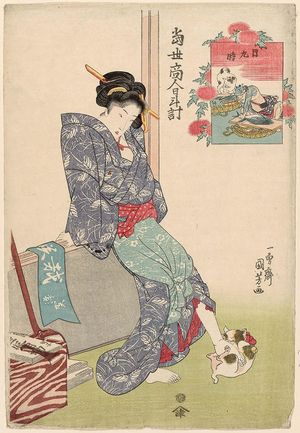
- Kuniyoshi, The Ninth Hour: Noon; Woman Playing with Cat, Fishmonger and Dog, from the series Sundial of Modern Tradesmen, 11.15955
- Kuniyoshi, Tsumagome: Abe no Yasuna and the Fox Kuzunoha, from the series Sixty-nine Stations of the Kisokaidô Road, 11.41803
S
- Sharaku, Actor Osagawa Tsuneyo II as Ippei's Older Sister Osan, 11.14674
- Sharaku, Actors Ichikawa Komazô III as Kameya Chûbei and Nakayama Tomisaburô I as Umegawa, 11.16483
- Shigemasa, Perspective Picture of the Sleeping Dragon Plum in the Plum Garden at Kameido, 11.14975
- Shigemasa, Perspective Picture of the Sleeping Dragon Plum in the Plum Garden at Kameido, 11.14977
- Shunkō, Actors Nakamura Nakazô I and Ôtani Hiroji III, 11.2014
- Shunshō, No. 6, Cui Zongzhi (Saisôshi), from the series Eight Immortals of The Wine Cup, 11.14847
T
- TEST-Utamaro I, Women Overnight Guests, a Triptych, 21.6328-30
- TEST-Utamaro I, Women Overnight Guests, left panel of triptych, 21.6328
- Toyoharu, A Fashionable Picture of Wada's Banquet, from the series Scenes of Japan in Perspective Pictures, 54.1499
- Toyoharu, The Armor-pulling Scene at Wada's Banquet, 11.14704
- Toyoharu, The Armor-pulling Scene at Wada's Banquet, 11.14725
- Toyokuni, Actor Arashi Kitsusaburô I as the Monkey Trainer Yojirô, in the Horikawa Scene of the Play Oshun and Denbei, 11.30331
- Toyokuni, Woman Under Maple and Ginkgo Leaves, from the series Comparison of Beauties, 11.13642
U
- Ukiyo-e
- Utamaro I, A Yoshiwara Triptych, 11.14191
- Utamaro I, Courtesan Asajiu of the Daimonjiya and Nanatsu-ume Sake by Momenya, from the series Aristocrats of Sake Compared to Courtesans of Six Selected Houses, 11.14267
- Utamaro I, The Geisha Ogie Matsuzô, Mine, and Ito, 11.14373
- Utamaro I, The Heron Maiden from series An Array of Dancing Girls of the Present Day, 11.14364