BkMUC-Saf

Safflower 紅花 (benibana): An organic red obtained from the florets of Carthamus tinctorius, it produces a wide range of tones from pale pink to red. The florets are picked, washed, massaged, and fermented to create safflower cakes (紅餅 beni mochi) from which the red dye can be extracted later. Dried florets can also be used to extract the dye directly. The florets are first washed with water to remove non-lightfast yellow chromophors including several quinochalcones. The red colorant, primarily carthamin, is then extracted in an alkaline solution. Safflower was grown throughout Japan during the Edo period for use as a cosmetic and dye. The area of Yamagata was known as a producer of high quality benibana and still produces it today.
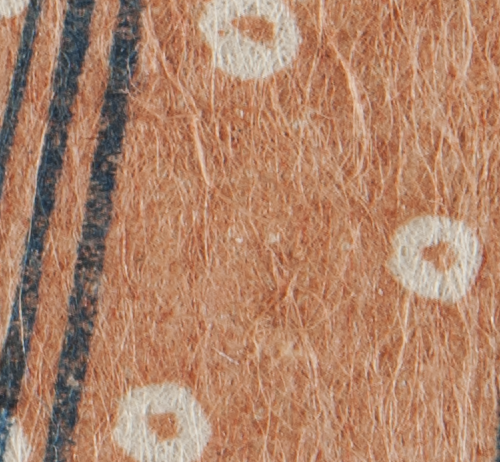
Safflower can appear as a pale pink, such as the delicate pink used to depict subtle eye shadow or blush effects as well as deeper reds. Safflower was noted to be an expensive colorant and often required multiple printings to achieve darker colors. Safflower and madder are the most commonly found reds before the introduction of aniline dyes in the 1860s. Red safflower and madder are found as a single colorant or as a mixture of the two. Although the visual difference between red safflower or madder used alone and a mixture of the two is currently difficult to discern, madder may have been used to extend the safflower. Safflower is most commonly mixed with dayflower to produce purple. The safflower and dayflower combination is continuously detected even after the introduction of synthetic colorants such as Prussian blue and aniline dyes, which seems to indicate that the tone obtained by the two was preferred over other possible mixtures of reds and blues.
For additional information see: Safflower, Safflower (Carthamus tinctorius) LC, Uemura Dye Archive: Safflower, Carthamus tinctorius (Kew)
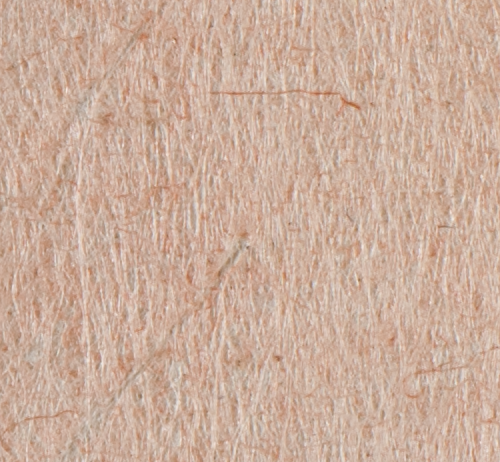
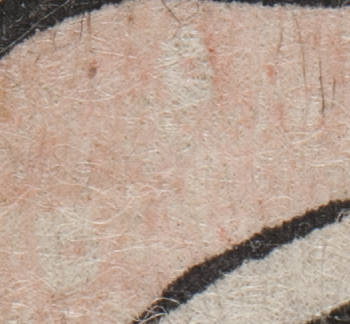
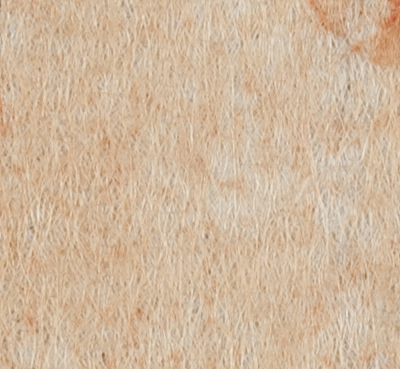
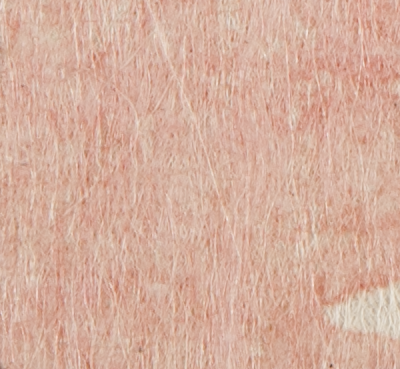
Examples of Safflower in Ukiyo-e Prints
|

|

|

|

|

Analysis
Excitation Emission Matrix (EEM) spectroscopy can easily identify the organic reds: safflower, madder, and sappanwood.

3D EEM plot for Safflower 
3D EEM plots for Red references 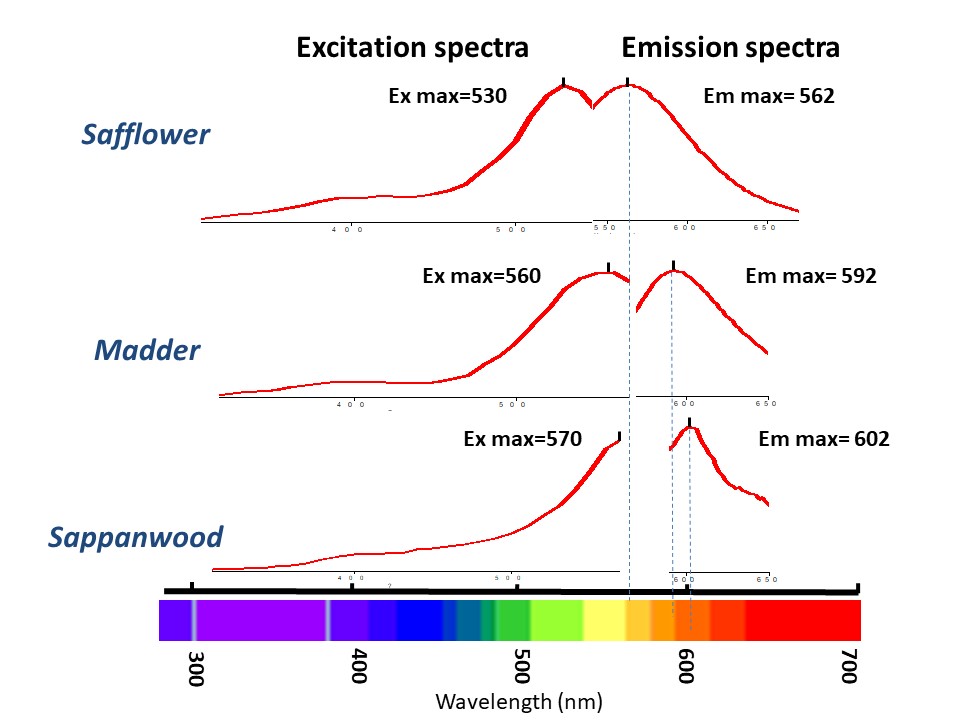
Overlay of EEM curves for Red references 
Overlay of FORS spectra for Red references 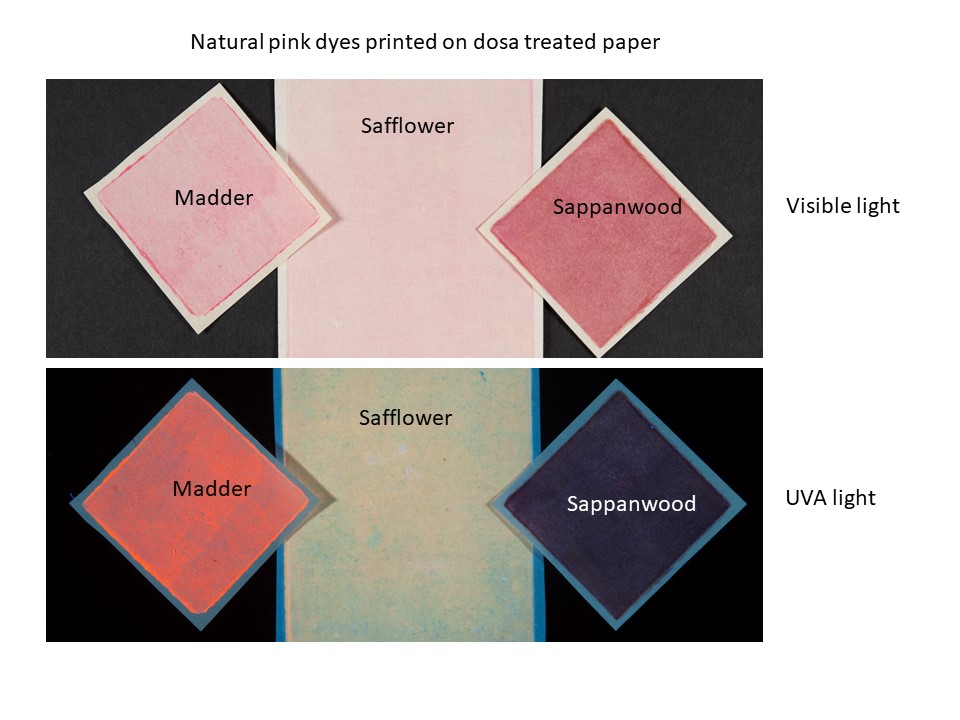
Visible light and UVA for Red references


Interpretation
- Safflower fluoresces under UVA radiation and produces a unique EEM plot, even when the safflower has visually faded to a dull brownish red.
- The 3D EEM spectrum of safflower appears as an oval shape in the yellow-red region with an excitation max of 530 nm and an emission max about 560-570 nm.
Images of Safflower
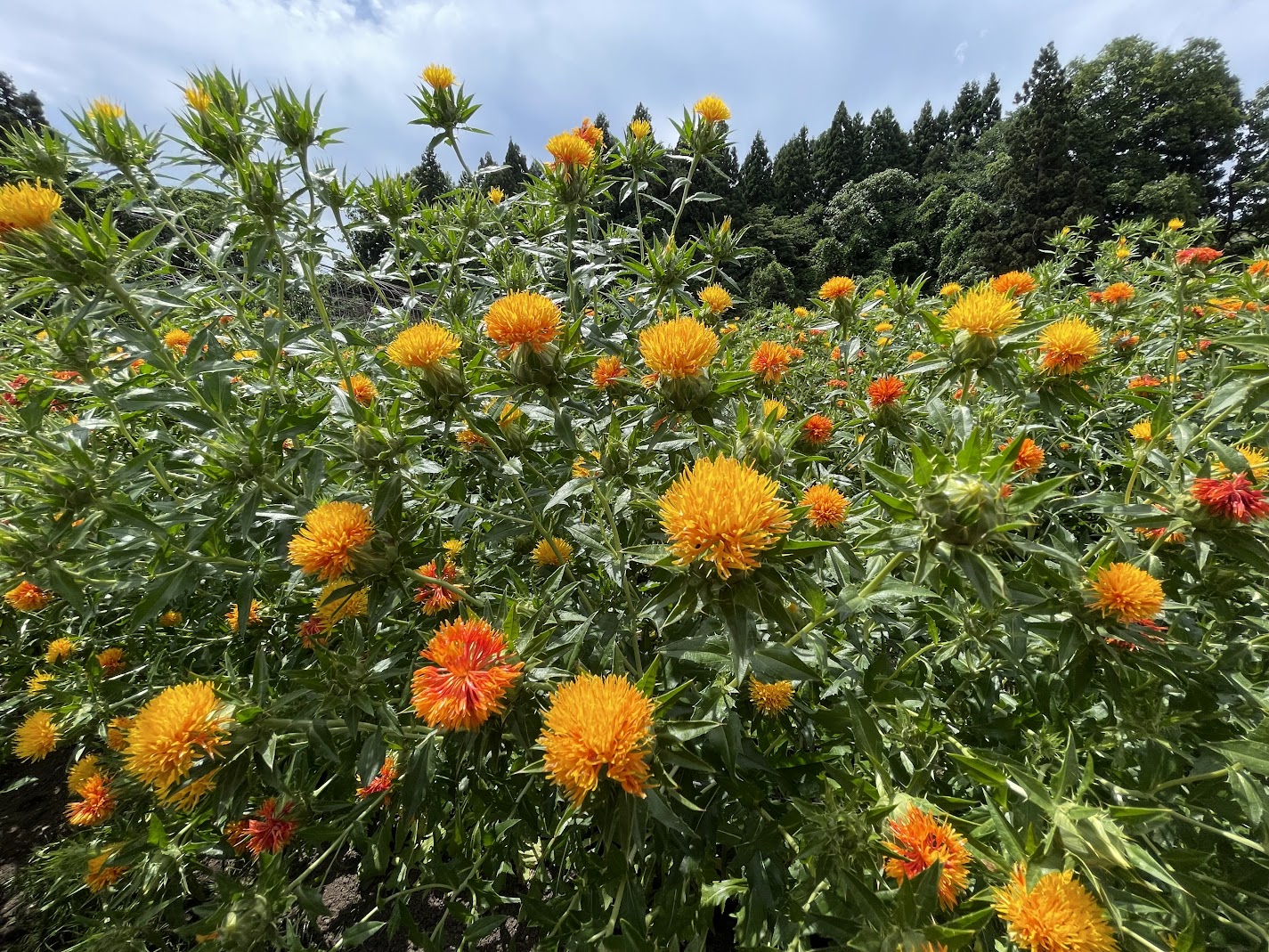
Carthamus tinctorius

Picked safflower petals

Dried safflower petals

Safflower cakes

Safflower colorant (細工紅 saiku beni), by Isehan Honten

Cosmetic beni (小町紅 komachi beni), by Isehan Honten

Paper dyed with safflower

Printed safflower

In Search of Forgotten Colours (video), by Victoria and Albert Museum
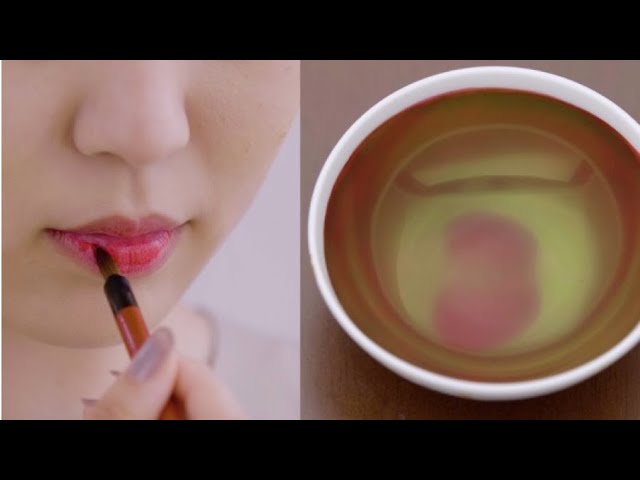
Mogami Beni-Color of Mystery (video), by Japan Video Topics


==Safflower Mixtures=="
- Numerous prints were found containing safflower overprinted or mixed with another color. The types of mixtures that have been found thus far are presented below (with the exception of the Purple mixtures that are listed on the main colorant page). Please click on any of the mixture types to see the Woodblock print list containing each of the mixtures.
|
|
List of Prints
Below is a list of prints where safflower was detected.